
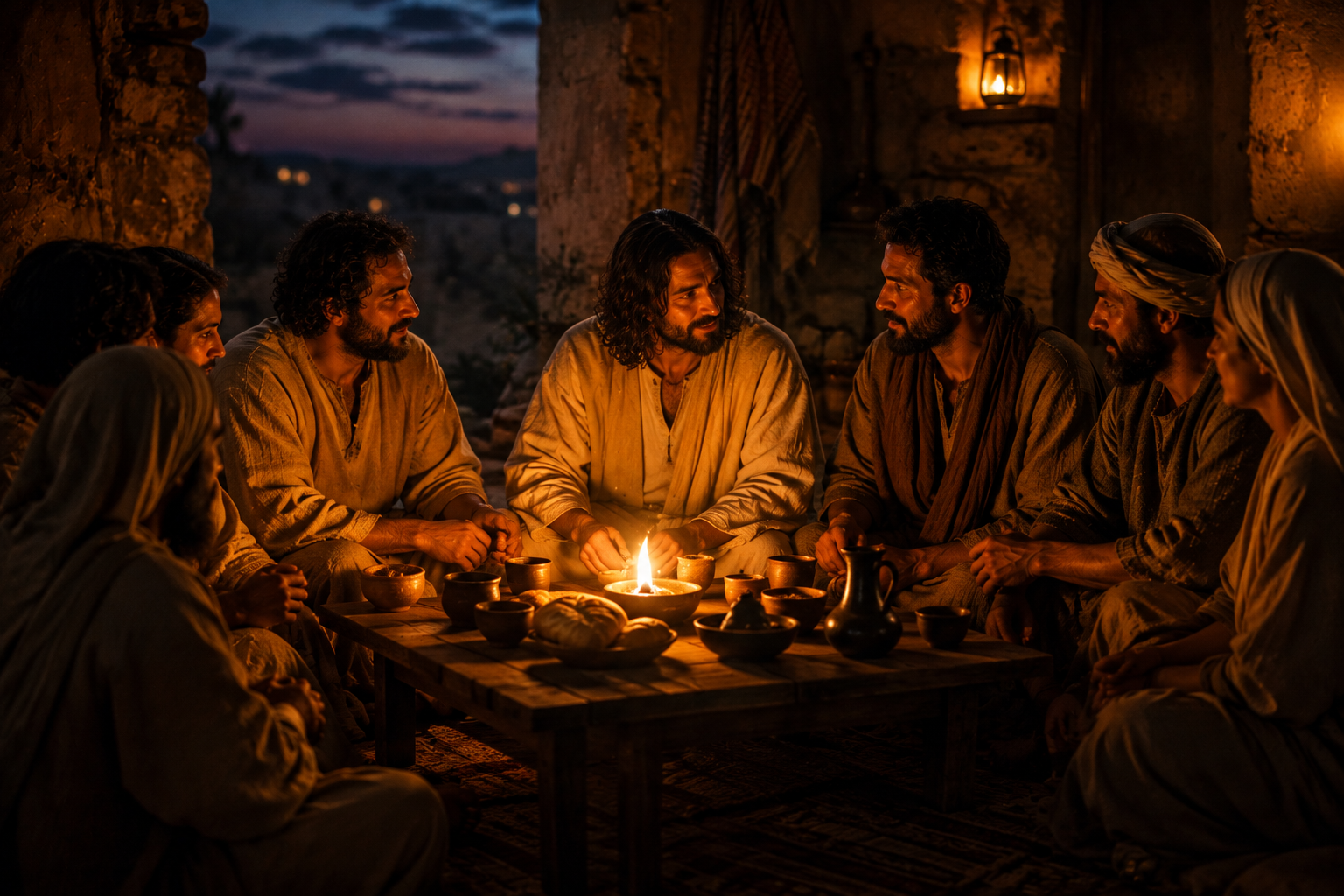
There’s something sacred about last words. When someone we love knows their time is short, what they choose to say carries extra weight. That’s exactly what we find in John 13, as Jesus sits with His disciples on the night before His crucifixion, and everything He does and says points to one central truth: love one another.
A Basin, a Towel, and a Lesson in Humility
Jesus knew His hour had come. He knew He was returning to the Father. And yet, instead of using His final hours to be served, He got up from the table, wrapped a towel around His waist, and began washing His disciples’ feet.
Peter resisted at first. It didn’t feel right to him that the Master would kneel before the servant. But Jesus told him plainly, unless he allowed this, he would have no part with Him. Peter, in typical Peter fashion, swung the other way entirely and asked for his whole body to be washed. Jesus gently corrected him: those who have already been bathed only need their feet washed, for they are already clean.
This moment wasn’t really about dirty feet. It was about humility. Jesus was teaching His disciples, and teaching us, that greatness in the kingdom looks like service. Before He ever commanded them to love one another, He showed them what love in action looks like.

When the Spirit Warns Us
As the evening continues, Jesus reveals that one of His own would betray Him. Scripture tells us He was troubled in spirit. As believers, this is worth pausing on. When we train our spirit to be sensitive to God rather than ruled by our flesh, we are able to recognize the nudges and warnings He sends us. Jesus received a signal that His time of suffering was near, and it prepared Him for what was coming.
Our spirit has a way of alerting us to danger too. The only way to stay attentive to those signals is to grow closer to the Holy Spirit. Without His guidance, we can miss what God is trying to show us.
Jesus then gave a piece of bread to Judas. And the moment Judas received it, Scripture says Satan entered him. It’s a sobering reminder that our choices matter. Judas’s life, his decisions, and the condition of his heart over time had made him vulnerable in that moment. The enemy doesn’t create opportunity out of nowhere. He looks for the doors we’ve already left open.
The New Commandment: Love One Another
Once Judas leaves to carry out the betrayal, Jesus shifts the conversation entirely. He tells His disciples that He is about to be glorified, that His time with them is short, and that where He is going, they cannot yet follow. Then He gives them something new to hold onto:
“Love one another. As I have loved you, so you must love one another. By this everyone will know that you are my disciples, if you love one another.”
This wasn’t a suggestion. It was a command, and it’s one of the clearest markers Jesus gives for what it means to follow Him. Not perfect theology. Not flawless church attendance. Love.
Throughout His ministry, Jesus kept coming back to this same thread. Love your neighbor. Love your enemy. Love one another. And ultimately, He came to earth and gave His life because of love. That’s the standard He’s calling us to.

Why Love Matters So Much
It’s worth asking why God places such weight on this command to love one another. A few thoughts come to mind.
Love allows us to put someone else ahead of ourselves. We’re naturally wired toward self-interest, but love interrupts that instinct and teaches us to consider others above our own comfort.
Love helps us forgive. Bitterness and unforgiveness leave a door wide open for the enemy to work in our hearts. But when we love, we close that door. Love creates unity, and unity is something the enemy cannot easily penetrate. That’s precisely why he pushes hate, division, and contention. It’s where his agenda thrives.
Love creates an atmosphere where the Holy Spirit can dwell. Peace and calm make room for His presence. And when a believer loves wholeheartedly, especially loving people who haven’t loved them back, that’s a level of spiritual strength that’s hard to put into words. Add prayer to that kind of love, and you have someone the enemy genuinely has to reckon with.
Peter’s Good Intentions
The chapter closes with Peter, full of confidence, telling Jesus he’s ready to die for Him. Jesus, with tenderness rather than judgment, has to let him know the truth: his desire and his reality weren’t yet aligned. Before the night was over, Peter would deny even knowing Him, three times.
It’s a gentle reminder that our hearts can want to love well, want to stand strong, want to be faithful, and still fall short in the moment of testing. That’s not a reason for shame. It’s an invitation to depend on God’s strength rather than our own resolve.

Living It Out
Jesus didn’t just tell His disciples to love one another. He showed them first, with a towel and a basin, and then with His own life. That’s still the calling for us today. Not love that waits to be loved back. Not love that only shows up when it’s convenient. But the kind of love that kneels down, forgives freely, and stays faithful even when it costs something.
If there’s one thing to carry from this passage, let it be this: love isn’t just something we feel. It’s something we do.
For more faith-based Bible teachings and devotionals, visit walkingwiththelord.net, and for marriage and family encouragement, visit blissfullywedded.com.
Leave a Reply