
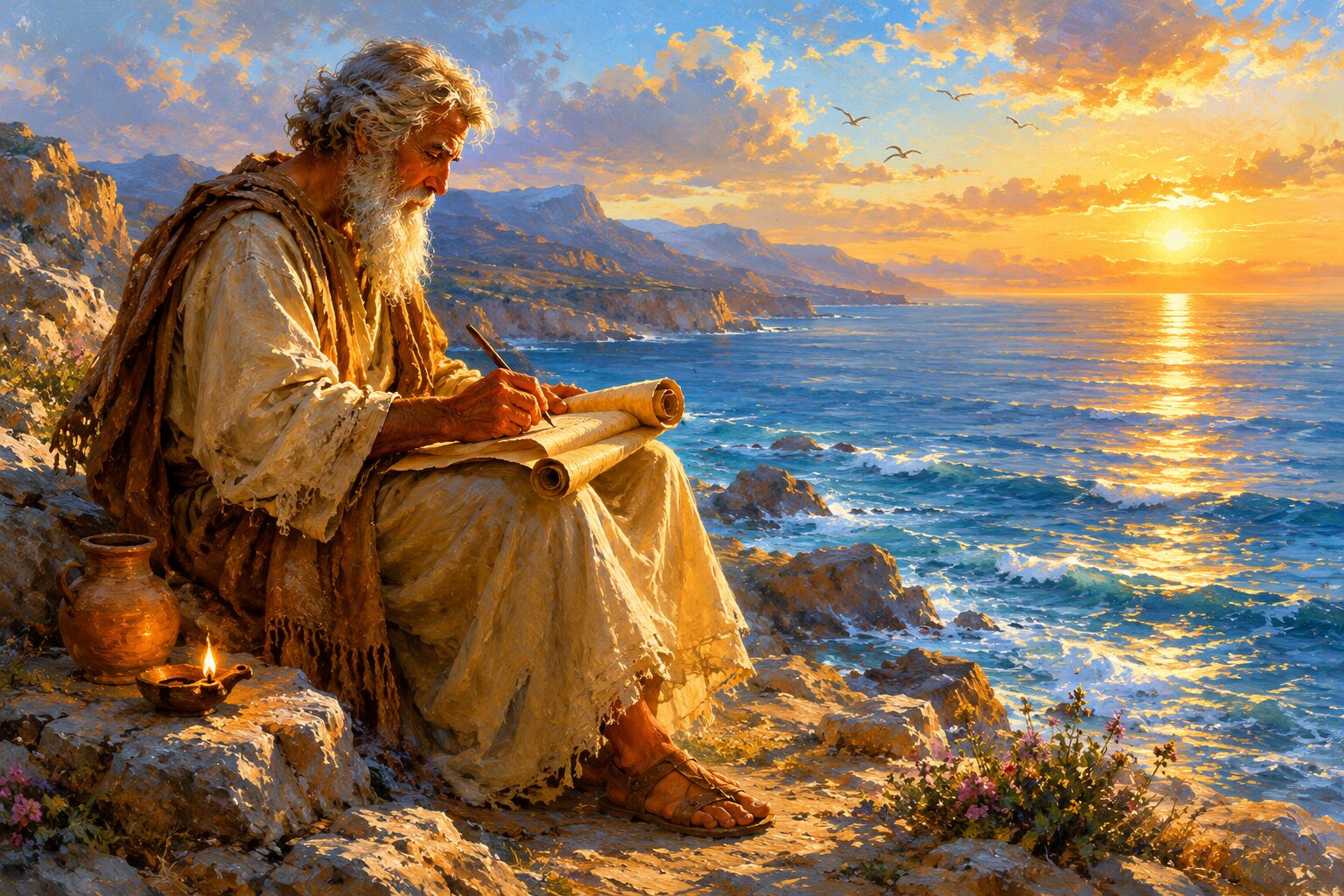
Who Was John the Disciple Jesus Loved?
John was the son of Zebedee, a fisherman from Galilee, and the younger brother of James. Jesus called the two brothers “Boanerges,” meaning Sons of Thunder, a nickname that hints at their bold and fiery temperament in their early years of ministry. Yet as John walked closely with Jesus, that thunder softened into something far more enduring: a deep and abiding love.
He is widely believed to be the unnamed “beloved disciple” referenced throughout the Gospel of John. Scholars and theologians across centuries have identified this figure as the author of the Gospel, three epistles, and the Book of Revelation. As a result, his contribution to the canon of Scripture is unmatched among any single apostle.
John at the Heart of Jesus’ Inner Circle
Among the twelve, Jesus selected three disciples for especially intimate moments: Peter, James, and John. This inner circle witnessed the Transfiguration on the mountain, where Jesus appeared in radiant glory alongside Moses and Elijah. These same three men were also the ones Jesus brought deeper into the Garden of Gethsemane on the night of His arrest, asking them to watch and pray while He agonized before the Father.
John was present at some of the most sacred moments in the life of Christ. Consequently, his writings carry a firsthand intimacy that sets them apart from other New Testament accounts. When he writes that “God is love” in his first epistle, he is not offering an abstract theological idea. He is drawing from years of lived experience at the side of Jesus.
“Whoever does not love does not know God, because God is love.”
The Last Supper and a Place of Honor
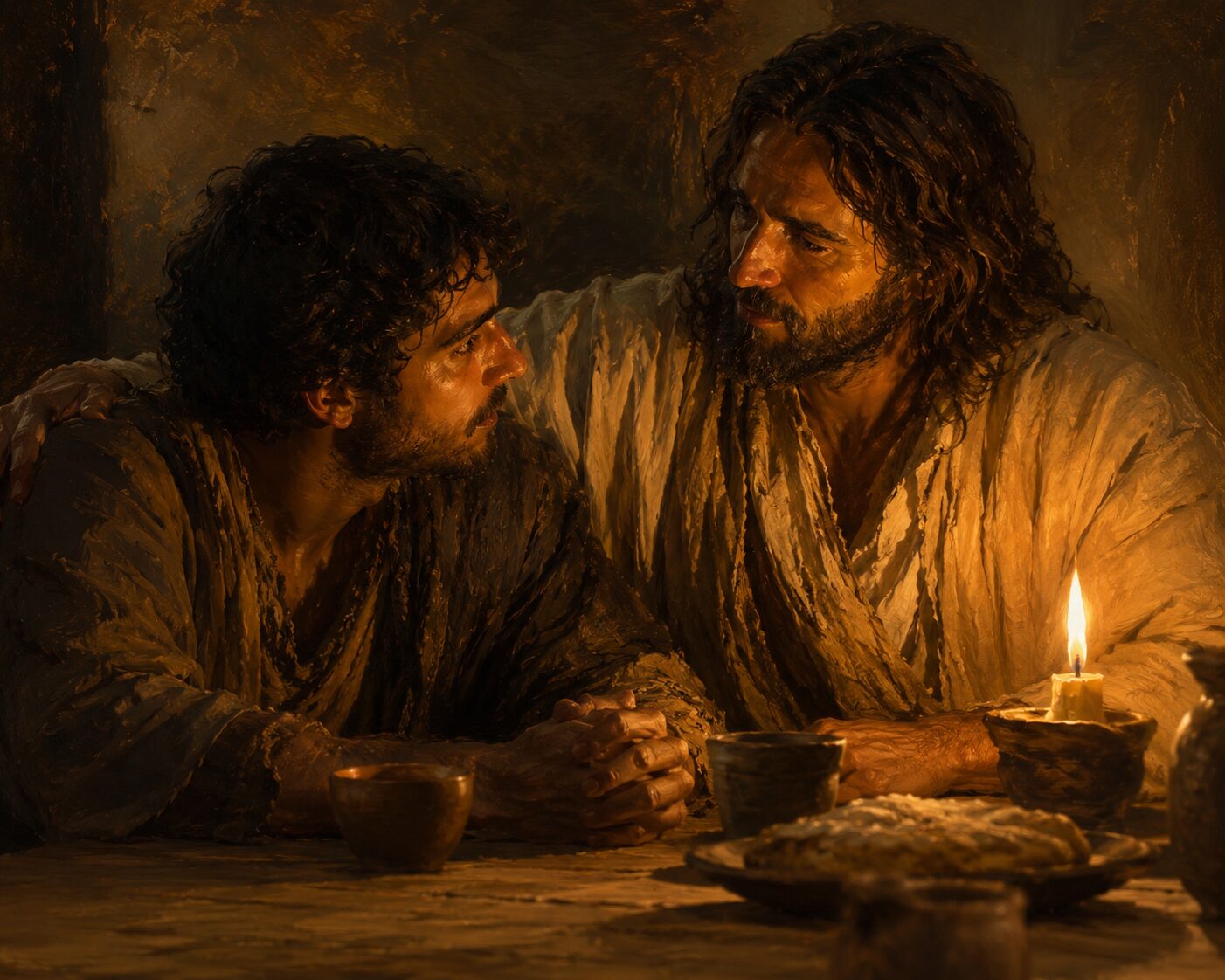
One of the most striking scenes in all of Scripture unfolds at the Last Supper. According to the Gospel of John, the beloved disciple reclined next to Jesus and leaned against Him. When Peter wanted to know who would betray Jesus, he motioned to John to ask, recognizing that John held a place of unusual closeness and trust at that table.
This moment reveals something important about John’s character. He was not simply a loyal follower. He was a friend. His nearness to Jesus at that final meal was not accidental. It reflected a bond built on years of traveling together, listening, questioning, and believing through every season of ministry.
John at the Cross and the Empty Tomb
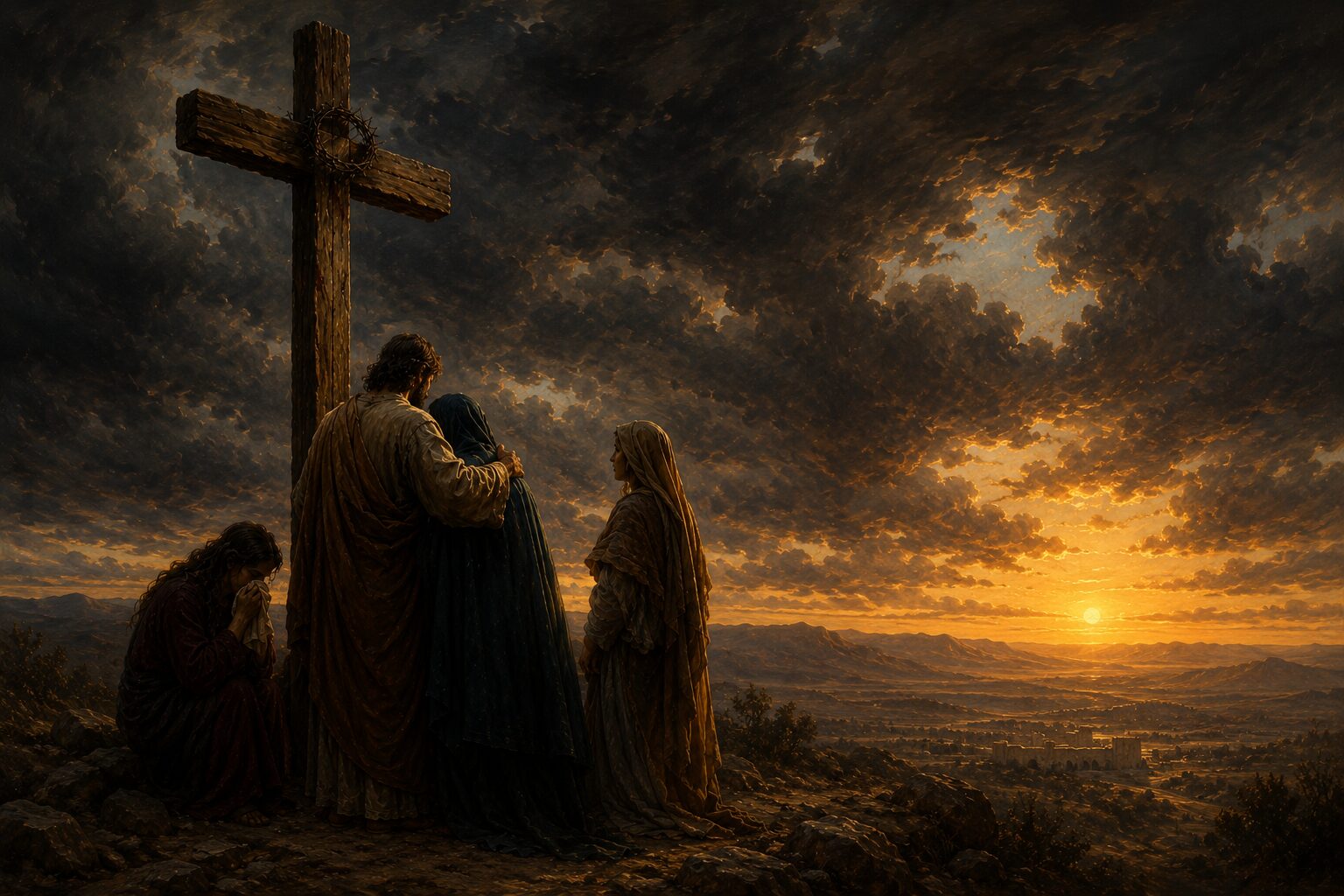
While most of the male disciples fled in fear after Jesus was arrested, John remained. He stood at the foot of the cross alongside Mary, the mother of Jesus, and a small group of faithful women. In that moment of unimaginable grief, Jesus looked down and entrusted His mother to John’s care. From that day forward, John took Mary into his own home.
This act of trust speaks volumes. Jesus, even in His dying moments, chose John as a safe harbor for the person He loved most on earth. It is therefore no surprise that John and Peter were the first to run to the tomb on resurrection morning. John arrived first, looked in, saw the burial cloths lying there, and believed.
John is the only one of the twelve apostles believed to have died of natural causes. His life of faithfulness, even through exile and persecution, stands as one of the most remarkable in all of church history.
John the Disciple Jesus Loved: A Theologian of Love
As John grew older, his ministry became defined by one central message: love one another. Early church writings record that when he was very old and too frail to preach at length, he would simply repeat this command to his congregation. When asked why he said it so often, he reportedly replied that it was the commandment of the Lord, and that if it alone were kept, it would be enough.
This singular focus on love was no accident. He had spent years watching what love looked like in human form. As a result, his Gospel opens not with a genealogy or a birth narrative but with a sweeping cosmic declaration: “In the beginning was the Word.” His portrait of Jesus is the most theological and spiritually elevated of all four Gospel accounts.
John’s Later Life and Legacy
Unlike his brother James, who became the first apostle martyred for the faith, John lived to an old age. Tradition holds that he ministered extensively in Ephesus and eventually died there of natural causes, making him the only one of the twelve to die peacefully. Still, his life was not without suffering. The Roman Emperor Domitian reportedly had John thrown into boiling oil, yet he emerged unharmed. He was later exiled to the island of Patmos, where he received and recorded the vision we now know as the Book of Revelation.
Even in exile, John continued to write, to witness, and to love. His final words in Scripture, found at the close of Revelation, are simply: “Come, Lord Jesus.” It is a fitting prayer from the man who, more than anyone else among the apostles, had sat closest to Him.
Why John the Disciple Jesus Loved Still Matters
His life and witness offer a timeless invitation to every believer. John reminds us that closeness to Christ changes a person from the inside out. The Sons of Thunder do not stay sons of thunder forever. In the presence of Jesus, boldness becomes gentleness, ambition becomes service, and fear becomes faith.
His story also reminds us that love is not merely a feeling but a posture of the whole life. John loved because he was first loved. And in that response, he became one of the most enduring and beloved voices in all of Christian history.
Whether you are new to the faith or have walked with Christ for decades, the example of the disciple Jesus loved is a compelling model for what it means to remain close to God, stay faithful through suffering, and anchor your entire life around the one commandment that never loses its power: love one another.
Holy Bible (John 13, John 19, John 20, 1 John 4, Revelation 22); Foxe’s Book of Martyrs; Early church writings of Clement of Alexandria and Irenaeus of Lyon.
For more encouraging content on faith and daily Christian living, visit Walking With the Lord.
If you are on a journey of love in marriage and relationships, explore Blissfully Wedded for inspiration and practical wisdom for couples.
Leave a Reply