

Jesus restores Peter in one of the most tender scenes in all of Scripture. In John 21, the risen Lord meets His disciples on the shore of the Sea of Galilee, cooks them breakfast, and then turns to the man who had denied Him three times. Before He gives Peter any assignment, He asks a single question: “Do you love me?” This devotional walks through that conversation and what it reveals about the heart of God toward us.
Jesus Stayed Close After the Resurrection
John tells us this was the third time Jesus showed Himself to the disciples after rising from the dead. He did not appear once and vanish. Instead, He kept returning, kept showing up, and kept reassuring the people He loved.
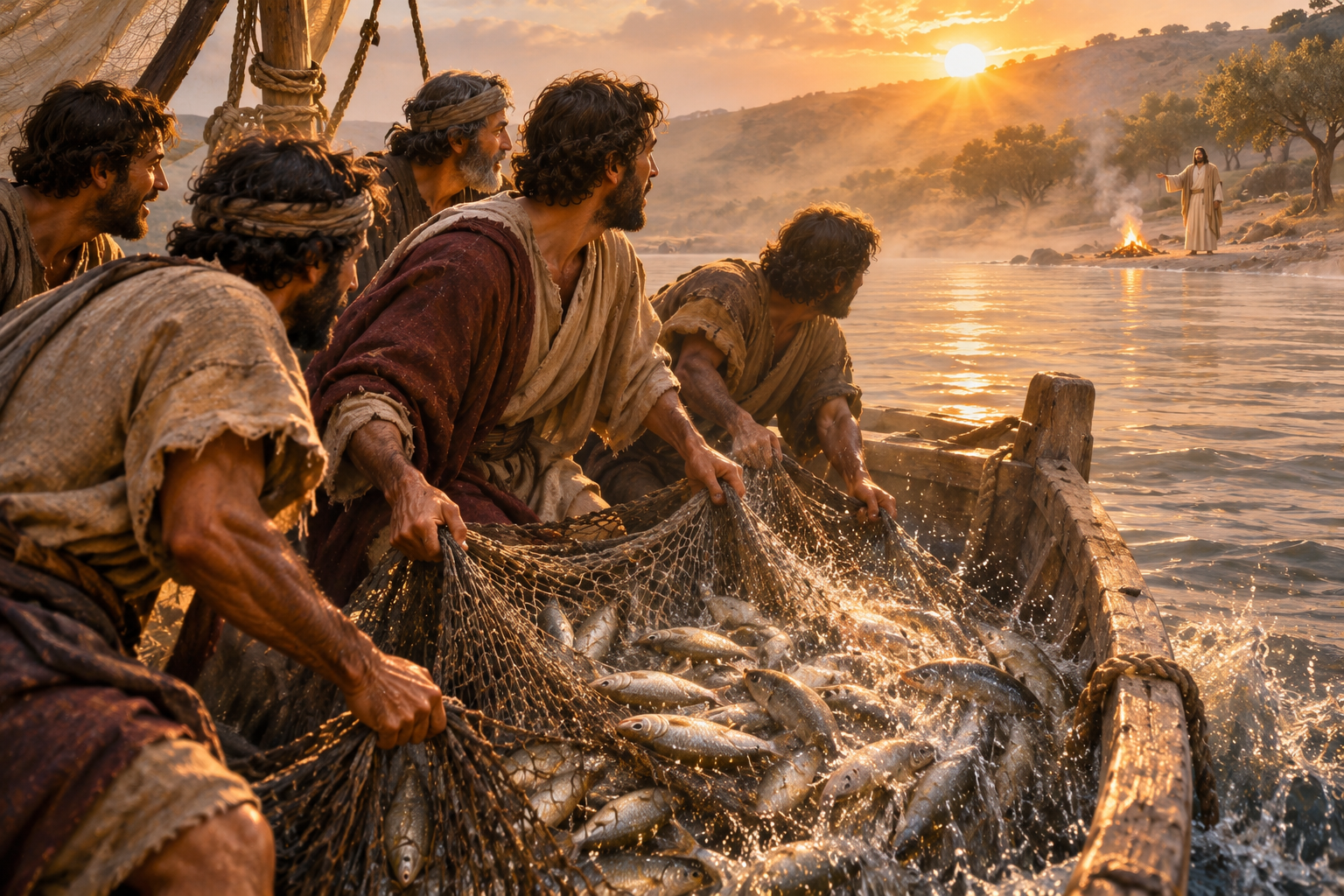
Notice, too, that the disciples did not launch into ministry right away. Jesus gave them time. In fact, there was enough time for Peter to say, “I’m going fishing,” and for several others to follow him onto the boat. Sadly, they fished all night and caught nothing.
Then Jesus met them in that empty place. He called from the shore, told them where to cast the net, and filled it. As they came ashore, they found a fire already burning, with fish and bread waiting on it. Jesus loved fellowship. In fact, the way Jesus restores Peter begins not with words but with a warm meal by the fire.
That matters for us. God often meets us first in our need, not our performance. He provides, He sits with us, and only after that does He speak about the work ahead.
Why Jesus Asked Peter If He Loved Him
After breakfast, Jesus turned to Simon Peter and asked, “Do you love me?” Peter said yes, and Jesus replied, “Feed my lambs.” Then He asked again, Peter answered again, and Jesus said, “Take care of my sheep.” When He asked a third time, Peter was grieved. Still, he answered, “Lord, you know all things; you know that I love you.” And Jesus said, “Feed my sheep.”
So why ask about love before handing out a task? Jesus already knew how Peter felt. He is God, after all. However, Peter had just lived through something traumatic. He had watched his Teacher arrested, beaten, and crucified. Worse still, he had denied Him three times beside a charcoal fire, just as Jesus said he would. You can read more about that night in our devotional on Peter’s denial in John 18.
That burden was likely still weighing on his heart. Therefore, the questions were not for Jesus’s benefit; they were for Peter’s.
How Jesus Restores Peter Through Three Questions
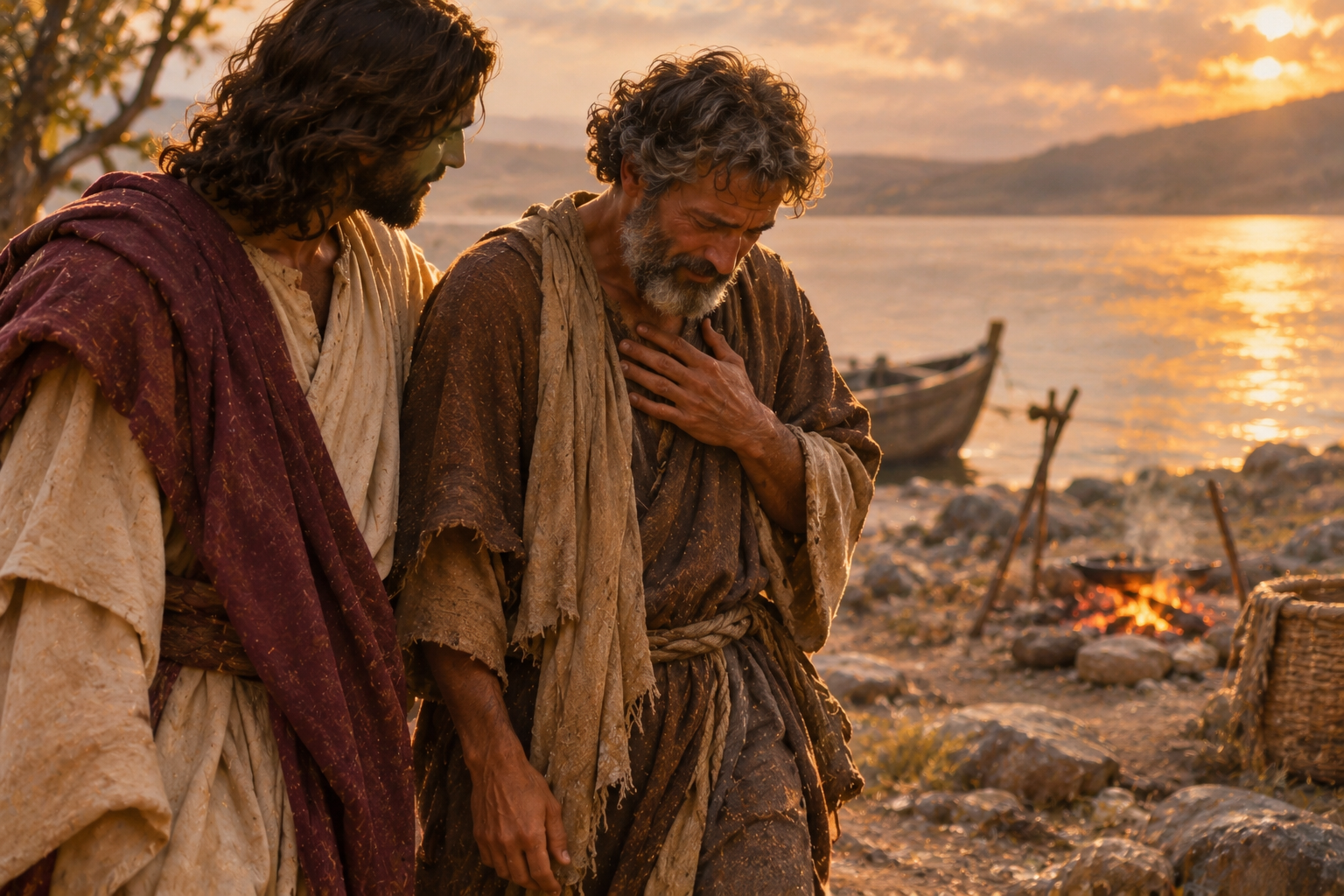
Each time Jesus asked, Peter had to stop and search his own heart. Did he truly love Jesus, or had his failure proved otherwise? The first answer may have come quickly. The second may have come slower. By the third, Peter felt hurt, almost offended that Jesus would keep asking.
Yet in that very moment, something settled in him. Peter came to the realization that, despite everything, he really did love Jesus. Three denials were met with three confessions of love. This is how Jesus restores Peter: not with a lecture about his failure, but with a question that lets love speak louder than shame.
Only then did the commission come. After a meal with Jesus, Peter was entrusted with the mantle of leadership. Feed my lambs. Take care of my sheep. Feed my sheep. The man who had fallen would now shepherd others.
Perhaps you carry a failure like Peter’s. Maybe you have said or done something you cannot seem to put down. Jesus is not asking you to relive it. Rather, He asks, “Do you love me?” Your honest answer is where restoration begins.
Following Jesus Without Comparing Your Path
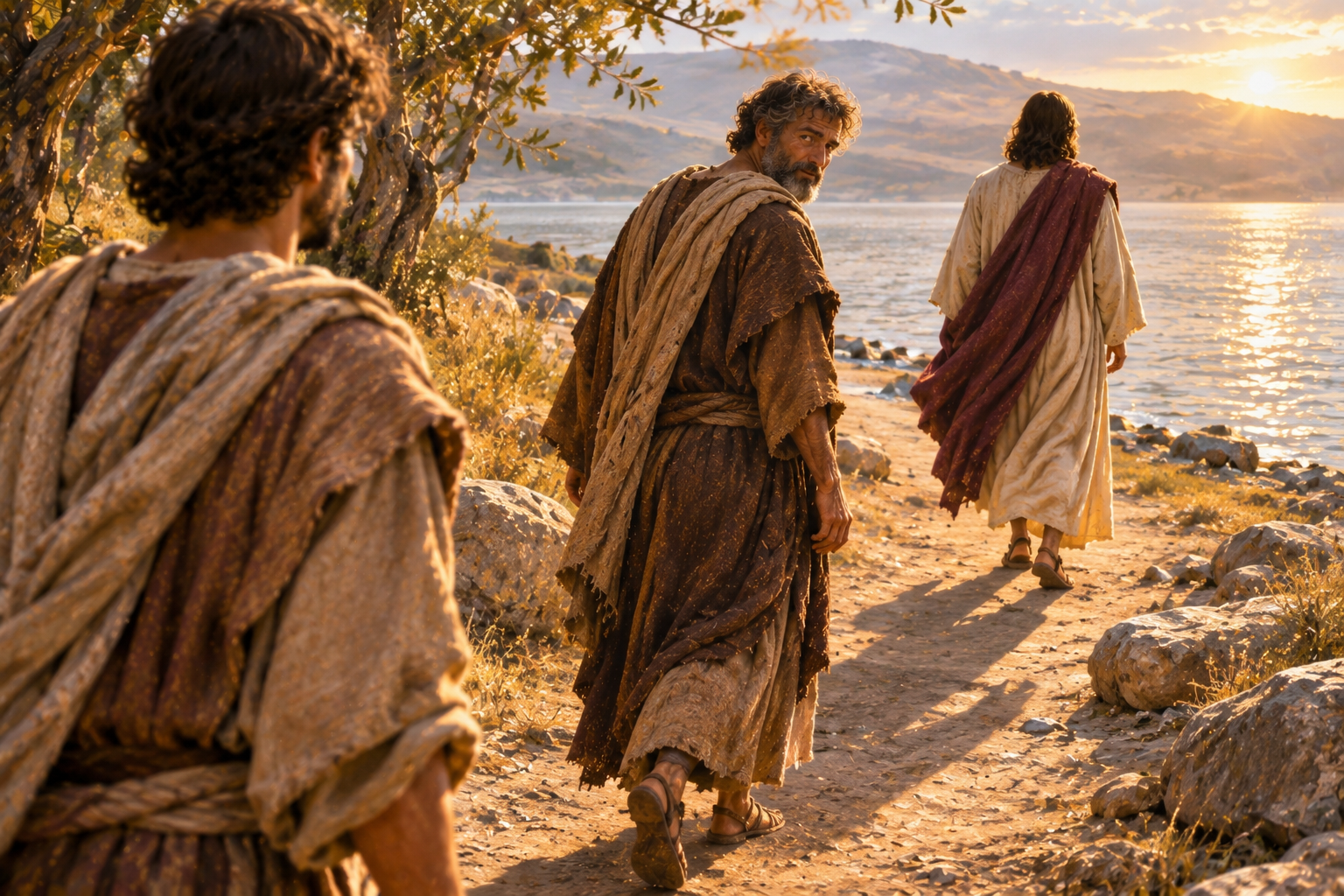
Next, Jesus told Peter what kind of death he would one day face to glorify God. When Peter was younger, he dressed himself and went where he wanted. When he was old, he would stretch out his hands, and someone else would lead him where he did not want to go. After saying this, Jesus told him plainly, “Follow me.”
Immediately, Peter turned, saw John, the disciple whom Jesus loved, and asked, “Lord, what about him?” Jesus answered that if He wanted John to remain alive until He returned, that was His decision. In other words, John’s path was not Peter’s concern. Peter’s job was to follow.
Interestingly, this exchange started a rumor among the believers that John would never die. John gently corrects it, pointing out that Jesus never said that.
How often do we do what Peter did? We receive our calling and immediately glance at someone else’s. The same Jesus who restores Peter also refocuses him. Your assignment is yours, and their story is in His hands.
A Testimony That Is True
Finally, John closes his Gospel by confirming that he is the author and that his testimony is true. He adds that Jesus did so many other things that if every one were written down, the whole world could not hold the books.
What a fitting ending. John has shown us a Savior who stays close, feeds the hungry, restores the broken, and calls ordinary people to follow Him. Even so, there is more of Him than any library could contain.
Reflection Questions
- Where do you need Jesus to meet you in your need before you can step into your calling?
- Is there a failure you are still carrying that Jesus wants to restore?
- If Jesus asked you today, “Do you love me?”, how would you answer?
- Are you comparing your path to someone else’s instead of simply following Him?
A Prayer
Lord Jesus, thank You for meeting me where I am, even in my empty nets and my failures. Just as You restored Peter on that shore, restore my heart today. Search me, and let my love for You speak louder than my shame. Help me follow You without comparing my path to anyone else’s. Amen.
For more faith-based Bible teachings and devotionals, visit walkingwiththelord.net, and for marriage and family encouragement, visit blissfullywedded.com.
Leave a Reply