
Learning to discern the will of God rarely happens in a calm, quiet moment. More often, it happens when emotions run high and a decision feels urgent. In John 18, we watch Peter face two of those moments in a single night. In fact, his choices show us exactly why discernment matters so much.
Peter loved Jesus deeply. Yet love alone did not help him see what God was doing. That is a lesson many of us need, because sincere intentions can still lead us in the wrong direction.
What Happened in the Garden
After praying with His disciples, Jesus went to a garden across the Kidron Valley. They often met there, so Judas knew exactly where to find Him (John 18:1-2). That night, Judas arrived with soldiers and officials to arrest Him.
Jesus did not resist. Instead, He stepped forward and asked them to let His disciples go. John explains that this fulfilled His own words: “I have not lost one of those you gave me” (John 18:9).
Peter, however, drew a sword and cut off the ear of Malchus, the high priest’s servant. Jesus answered right away: “Put your sword away! Shall I not drink the cup the Father has given me?” (John 18:11).

When Love Gets in the Way
This was not the first time Peter tried to keep Jesus from the cross. When Jesus first spoke about His death, Peter said, “Never, Lord! This shall never happen to you!” (Matthew 16:22). Jesus rebuked him, explaining that Peter had in mind “merely human concerns” rather than the concerns of God (Matthew 16:23).
Peter’s heart was in the right place. Still, his actions worked against God’s plan. That is the danger of acting without discernment. We can love God, mean well, and still push against His will.
Maybe you have done the same. Perhaps you rushed to fix a situation God was using to shape you. Or you fought hard to keep open a door He was gently closing.
Fear in the Courtyard
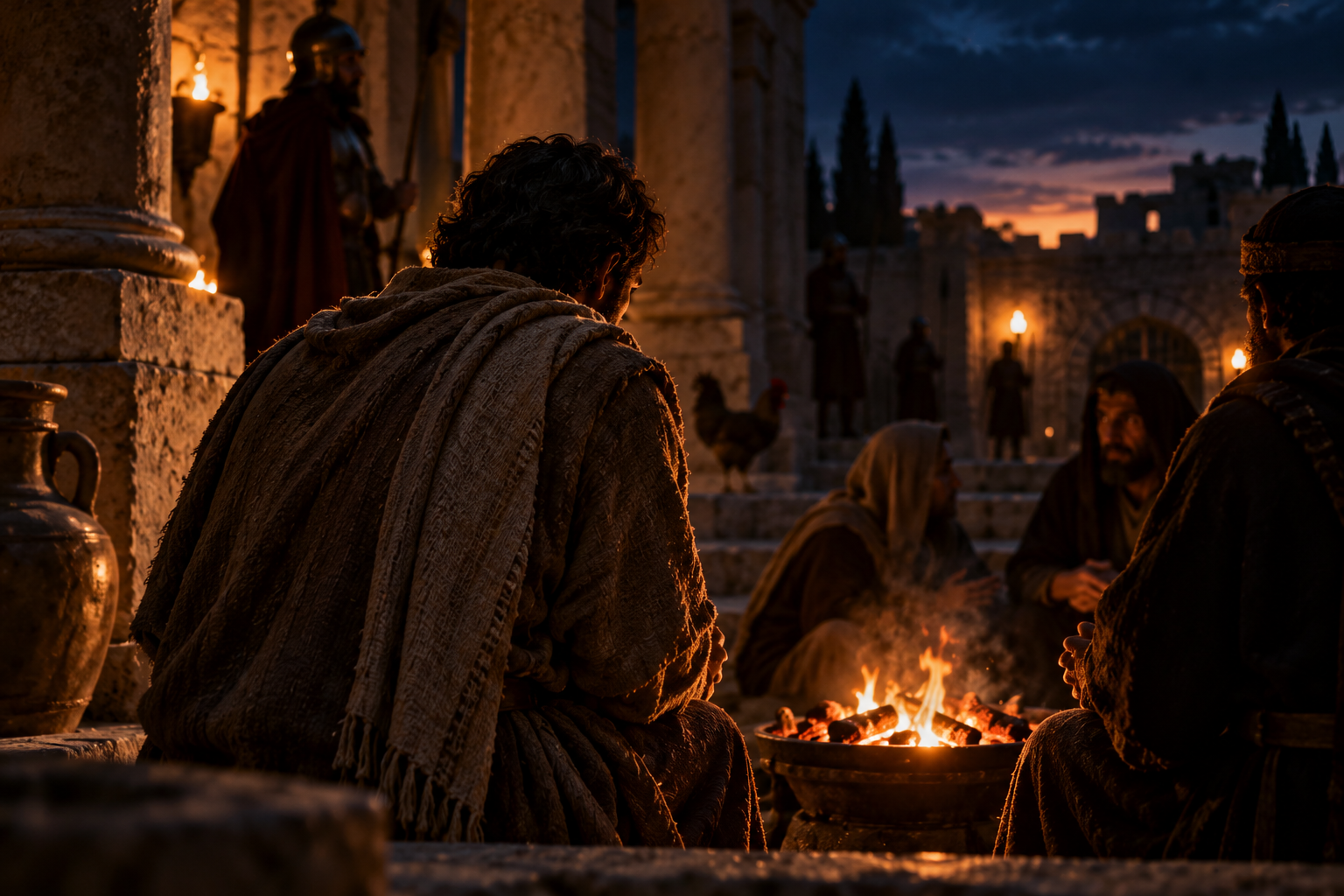
After the arrest, Jesus was taken to the high priest and later to Pilate. Meanwhile, Peter waited in the courtyard. When people recognized him, he denied knowing Jesus three times (John 18:15-27).
The man who drew a sword could no longer say His name. Why? Fear. Peter was uncertain about what would happen, and he was afraid of sharing the same fate. Yet he did not understand that this cross was never his to carry.
We often run from the very thing we say we love when life gets hard. Sometimes we fear the danger itself. Other times, we fear what people will say or think. However, when the approval of others becomes our priority, we cannot fully put God first. Jesus said, “Whoever disowns me before others, I will disown before my Father in heaven” (Matthew 10:33).
Thankfully, Peter’s story did not end in the courtyard. After the resurrection, Jesus lovingly restored him (John 21:15-19). His failure was real, but it was not final. So instead of running away when trouble comes, we can run toward the Lord. “The name of the LORD is a fortified tower; the righteous run to it and are safe” (Proverbs 18:10).
“In this world you will have trouble. But take heart! I have overcome the world.” (John 16:33)
Jesus never promised Peter, or us, an easy road. Instead, He promised that the trouble would not have the final word.
How to Discern the Will of God in Everyday Life
Discernment is the ability to see clearly and judge well, especially when the right path is not obvious. It helps us tell truth from deception and God’s will from our own. Here are four steps drawn from Scripture.
1. Depend on the Holy Spirit
Discernment does not begin with human wisdom. Paul writes that the things of God “are discerned only through the Spirit” (1 Corinthians 2:14). Without the Spirit, even our best judgment is only a guess.
2. Let Scripture Renew Your Mind
Romans 12:2 calls us to be transformed by the renewing of our minds. As a result, we “will be able to test and approve what God’s will is.” In other words, renewing your mind means letting God’s Word reshape what you believe.
This has been true in my own life. Through reading, studying, and listening to sermons, my view of fear, money, and God’s promises has changed. Today I trust that His plans for me are good (Jeremiah 29:11), and fear no longer makes my decisions. The truth really does set us free (John 8:32).
3. Keep Growing From Milk to Solid Food
Hebrews 5:14 says solid food is for the mature, “who by constant use have trained themselves to distinguish good from evil.” That means discernment grows with practice. Consistent prayer and Bible study move us beyond the basics into deeper understanding.
4. Pray for Wisdom
Finally, ask. James 1:5 promises that God “gives generously to all without finding fault.” Paul also prayed that believers would grow in knowledge and insight so they could discern what is best (Philippians 1:9-10). Prayer is how we admit we cannot do this alone.
Putting It Into Practice This Week
- Pause before you act. Before your next big decision, pray James 1:5 over it by name.
- Notice your sword moments. Write down one area where you are trying to fix things your own way. Then ask whether you are acting from fear or from faith.
- Read slowly. Spend a few minutes each morning in John 18. Ask the Holy Spirit to show you something new each day.
- Watch for people-pleasing. Pay attention to where the opinions of others shape your yes or no.
Questions for Reflection
- Where am I acting out of love for God but without asking what He wants?
- What fear is most likely to make me go quiet about my faith?
- How consistent is my time in Scripture and prayer right now?

Learning to Discern the Will of God One Step at a Time
Peter’s night in John 18 reminds us that love needs discernment and courage needs trust. When you ask God to help you discern the will of God, you are not asking for a map of your whole life. Instead, you are asking His Spirit to lead you one faithful step at a time. And like Peter, you are never too far gone to be restored.
Lord, I want to follow Your will, not just my own good intentions. Forgive me for the times I reached for my own sword instead of trusting You. Forgive me, too, for the moments fear made me quiet. Fill me with Your Holy Spirit and renew my mind through Your Word. Give me wisdom when the path is unclear, and help me care more about what You think than what people think. When trouble comes, teach me to run to You. Thank You that, like Peter, I am never beyond Your grace. In Jesus’ name, amen.
For more faith-based Bible teachings and devotionals, visit walkingwiththelord.net, and for marriage and family encouragement, visit blissfullywedded.com.
Leave a Reply