
Introduction to Our Reflection on John 2
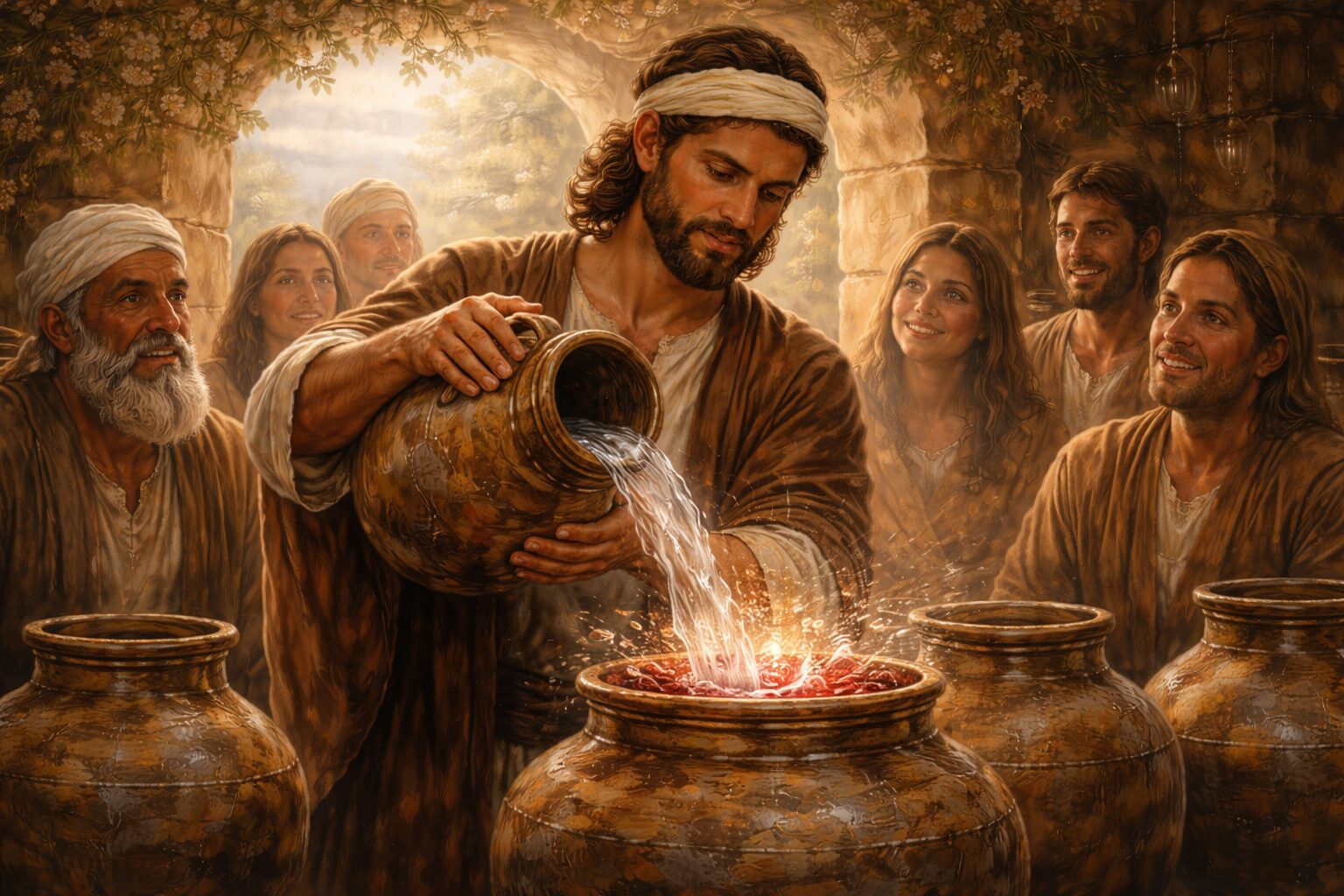
Reflection on John 2 reveals that the first miracle of Jesus was more than a moment of provision at a wedding; it was a powerful lesson about obedience, faith, and participation in God’s work. The wine runs out, Mary brings the concern to Jesus, the servants follow His instructions, and water becomes wine. However, when we look more closely, we see that this passage reveals something much deeper about our walk with Christ. It shows us how obedience, faith, and participation work together in the life of a believer.
The miracle at Cana is not only about provision. It is about relationship. It is about trust. It is about learning to respond when Jesus speaks.
When the Need Does Not Seem Urgent
At the wedding in Cana, the problem was not life-threatening. No one was sick. No one was in danger. It was a social embarrassment rather than a crisis. Yet Mary still brought the need to Jesus.
This teaches us that nothing is too small to place before the Lord. Sometimes we hesitate to pray about certain concerns because they feel minor compared to greater struggles in the world. However, this passage reminds us that God cares about the details of our lives. Every concern, whether large or small, can become an opportunity for Him to reveal His presence and power.
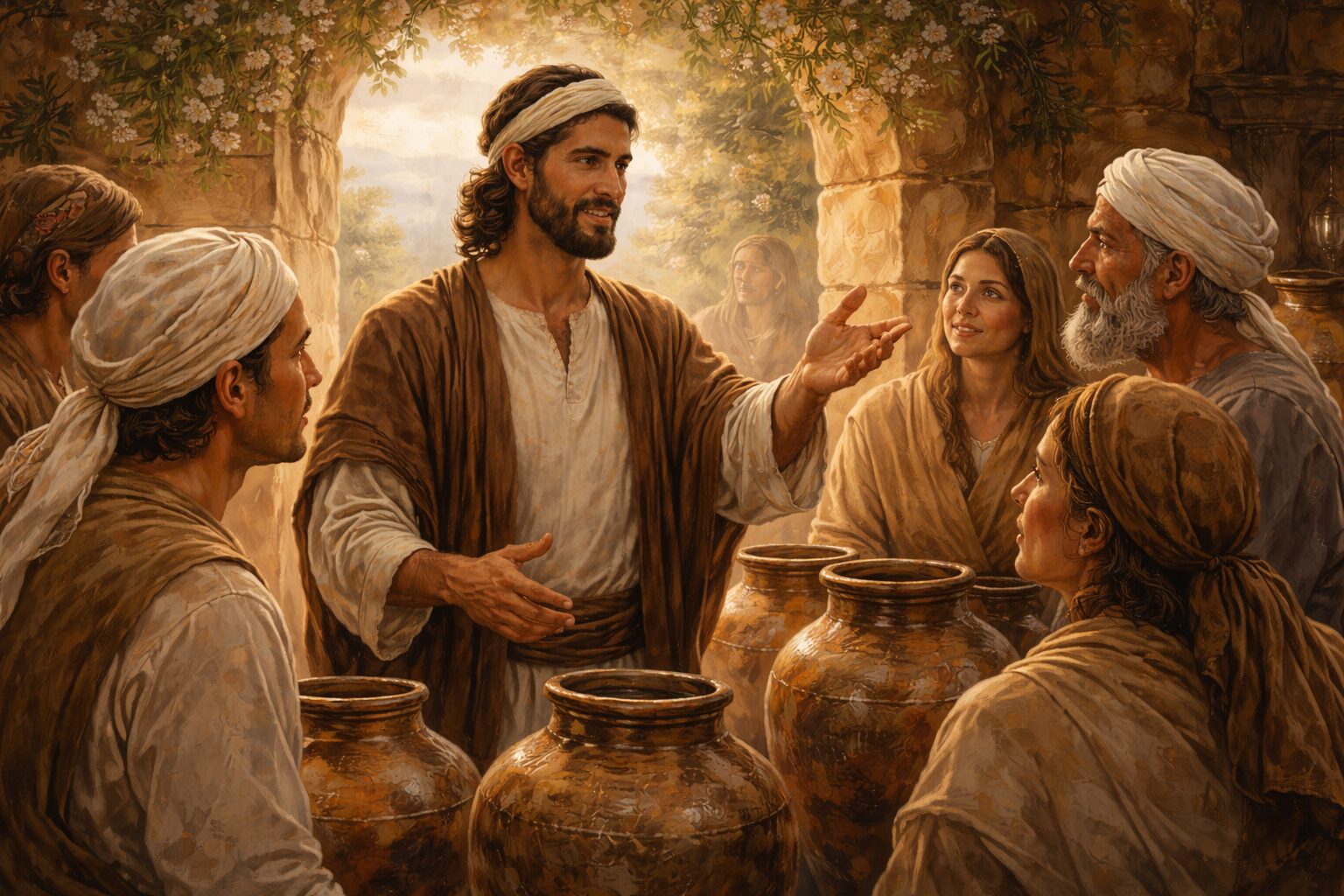
Mary’s response is especially meaningful. She did not pressure Jesus or attempt to control the outcome. Instead, she turned to the servants and said, “Whatever He tells you to do, do it.” Those words continue to echo throughout the lives of believers today.

Obedience Comes Before the Miracle
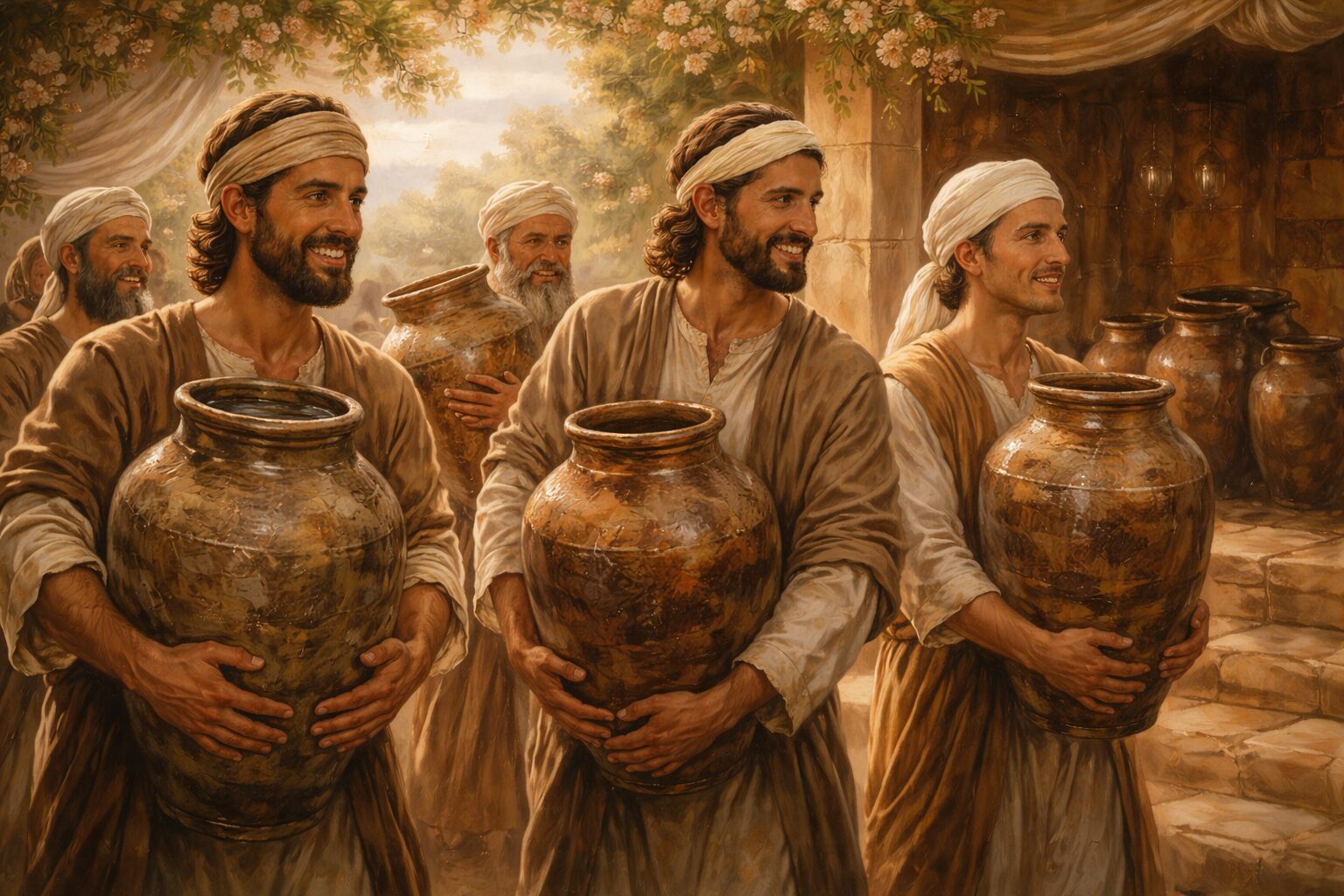
When Jesus instructed the servants to fill the jars with water, the request did not appear miraculous. It seemed ordinary and practical. Nevertheless, they obeyed fully. They filled the jars to the brim. Then Jesus told them to draw some out and take it to the master of the banquet. Again, they obeyed.
Only after their obedience did the miracle manifest. The water was transformed into wine, and not merely average wine, but the best wine served that day.
This pattern is significant. The servants did not see the outcome in advance. They did not receive a detailed explanation. They responded to the instruction they were given. In doing so, they participated in the unfolding of God’s glory.
A Pattern Repeated Throughout Scripture
The miracle at Cana reflects a pattern we see repeatedly in the ministry of Jesus. When the man born blind encountered Christ, he was told to go and wash in the pool of Siloam before he received sight. When ten lepers cried out for mercy, they were instructed to show themselves to the priests before their healing became visible. The paralytic was commanded to rise and walk before he experienced restoration. Fishermen were told to cast their nets again before they saw abundance.
In each of these accounts, obedience preceded manifestation. Jesus often gave an instruction that required faith-filled action. The miracle followed the response.
This does not suggest that we earn God’s power. Rather, it shows that obedience positions us to receive what He desires to do.
We Are Invited to Participate
John 2 also reveals that believers are not passive observers in their spiritual journey. The servants at Cana did not create the miracle, but they carried out the instruction. In the same way, we are invited to participate in what God is doing in our lives.
Participation begins with spiritual practices that align our hearts with Him.
Through Consistent Prayer
Prayer aligns our spirit with God and helps us discern His will. As we spend time in prayer, we grow more sensitive to His voice. Fellowship with the Father strengthens our ability to recognize when He is leading us. When we recognize His leading, obedience becomes a natural response rather than a reluctant one.
Through Scripture and Study
The Word of God brings light and clarity. Psalm 119:105 tells us that His Word is a lamp to our feet and a light to our path. When we study Scripture, confusion is replaced with understanding and direction.
Reading and meditating on the Word also builds faith. Romans 10:17 teaches that faith comes by hearing, and hearing through the Word of God. As we remain grounded in Scripture, our trust in Him deepens.
Additionally, Scripture protects us from ignorance. Hosea 4:6 warns that lack of knowledge can lead to harm. Therefore, studying the Bible strengthens us spiritually and reveals our inheritance in Christ. Jesus declared in John 8:32 that the truth sets us free, and that freedom grows as we apply what we learn.
Through Building Faith Intentionally
Faith is essential in the life of a believer. Hebrews 11:6 reminds us that without faith it is impossible to please God. However, faith does not grow automatically. It is cultivated through steady time in the Word and consistent prayer, where we learn to trust God’s character and rely on His promises.
As we remain rooted in Scripture and communion with Him, our confidence in God deepens. Over time, we begin to respond to life not from fear, but from trust. In this way, faith becomes steady rather than fragile, and obedience becomes a natural expression of that trust.
Through Using the Word as a Weapon
The Word of God is not only guidance; it is also a weapon in spiritual battles. Scripture teaches that our struggles are not merely physical but spiritual, and for that reason we must learn to respond spiritually. When fear, anxiety, doubt, temptation, or discouragement attempt to overwhelm us, Scripture provides stability and strength. Speaking God’s promises over our circumstances shifts our focus from the problem to His truth. Luke 10:19 reminds believers of the authority given to them in Christ. While challenges may come, we do not face them powerless.
However, using the Word as a weapon requires intentional practice. It means knowing specific truths and applying them directly to specific struggles. Below are examples of how Scripture can be used in common spiritual battles.
When Fear Tries to Take Over
We can declare Isaiah 41:10: “Do not fear, for I am with you; do not be dismayed, for I am your God.” When fear rises, instead of allowing anxious thoughts to spiral, we can say aloud, “Lord, You are with me. I will not be dismayed because You are my strength.” Repeating this truth redirects the heart from panic to trust.
When Anxiety Feels Overwhelming
Philippians 4:6–7 reminds us not to be anxious but to bring everything to God in prayer. In moments of anxiety, we can pray, “Father, I bring this concern to You. Guard my heart and mind with Your peace.” This transforms anxiety into surrender.
When Doubt Weakens Our Faith
Proverbs 3:5–6 instructs us to trust in the Lord with all our heart and not lean on our own understanding. When confusion clouds our judgment, we can respond by saying, “Lord, I may not understand this situation, but I choose to trust You and acknowledge You in this path.”
When Temptation Persists
1 Corinthians 10:13 assures us that God provides a way of escape. In moments of temptation, we can declare, “God has already provided a way out for me. I will choose the path of obedience.”
When Discouragement Sets In
Galatians 6:9 encourages us not to grow weary in doing good. When progress feels slow, we can remind ourselves, “I will not give up, because in due season there will be a harvest.”
Creating a personal guide of memory verses can be helpful. Identify the struggles you face most often and write down two or three Scriptures that directly address them. Meditate on those verses regularly so they become readily available in moments of pressure. Over time, the Word begins to rise naturally in response to challenges.
When Jesus was tempted in the wilderness, He responded with Scripture each time. He did not argue emotionally or rely on His feelings. He spoke truth. In the same way, when we consistently hide God’s Word in our hearts, it becomes the first response rather than the last resort.
Using the Word as a weapon is not about reciting verses mechanically. It is about believing them deeply enough to stand on them. As we speak truth in faith, our thoughts align with God’s promises, and our spiritual resilience grows stronger.
Spiritual Battle Memory Verse Guide
To help you practice this intentionally, I created a Spiritual Battle Memory Verse Guide as a companion resource. This guide walks you through common struggles and pairs them with specific Scriptures to pray, memorize, and declare.
Instead of searching for truth in the middle of pressure, you can prepare your heart in advance. As you build your personal list of memory verses, you will begin to notice that Scripture rises within you when challenges arise.
What once felt overwhelming begins to feel manageable because your response is anchored in God’s Word rather than emotion.
Three Lessons from Cana
1. God Cares About Every Detail
The setting of Jesus’ first miracle shows that He is attentive even to what seems small. Bringing our concerns to Him reflects trust and dependence.
2. Obedience Positions Us for Breakthrough
The servants did not fully understand what Jesus would do. Yet their willingness to obey allowed them to witness His power. Sometimes the instruction may appear simple, but faithful response often precedes visible change.
3. Partnership Deepens Our Walk with Christ
Walking with Jesus involves listening and responding. As we align ourselves through prayer, Scripture, and obedience, our faith matures and our relationship with Him deepens.
Scripture Reflection
John 2:5 — “Whatever He tells you to do, do it.”
Consider the following questions:
- Is there an area of your life where you sense God leading you?
- Have you delayed obedience while waiting for greater clarity?
- What step of faith can you take today in response to His voice?
Take time to sit quietly before the Lord and invite Him to speak.
Closing Prayer
Lord, help me to trust You in both the small and significant moments of my life. Teach me to listen carefully and obey faithfully. Strengthen my faith through Your Word, and guide my steps as I walk with You. May my obedience reflect my love and trust in You. Amen.
Leave a Reply