
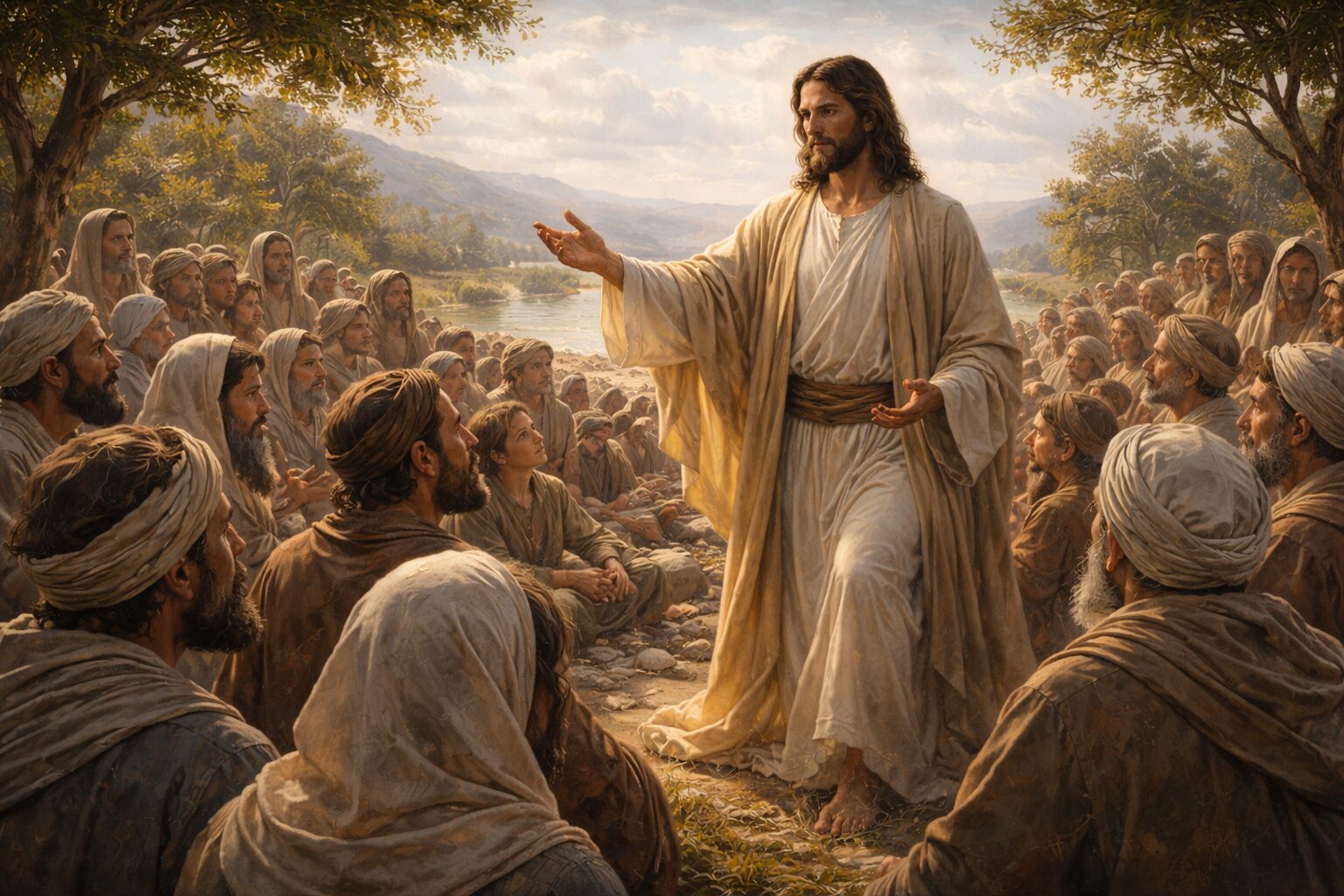
John 6 is one of the most powerful and thought-provoking chapters in Scripture. As we explore Jesus’ teachings in John 6, we see that the chapter begins with remarkable miracles, including Jesus feeding the five thousand and walking on water, before moving into deep spiritual truth that many people struggled to understand. Throughout this chapter, Jesus challenges the crowd, and us, to examine why we are truly seeking Him.
From Miracles to Motives and True Worship
(John 6:26–27)
After Jesus fed the five thousand and walked on water, the crowd followed Him across the lake and eventually found Him in Capernaum. At first, their actions appeared to reflect genuine pursuit and devotion. Yet, as the conversation unfolds, Jesus addresses what is truly in their hearts.
He explains that they are not seeking Him because they understood the meaning of the miracle, but because they had eaten the bread and were physically satisfied. In doing so, Jesus reveals something important. He is not moved by outward actions alone. Rather, He looks beyond what we do and sees the deeper reason behind it.
Our motives matter.
“Our hearts are fully open before God, and we cannot hide our motives from Him.”
Our hearts are fully open before God, and we cannot hide our motives from Him. Psalm 139 reminds us that even before we speak, God already knows our thoughts completely. Because of this, we may be able to appear devoted on the outside, yet God always sees what is truly in the heart.
From this, we are led into a deeper reflection about true worship. While Jesus exposes the motives of the crowd, it also reveals a broader principle about how we approach God.
True worship is not just about what we say or what we do outwardly, but about what is happening within us. It is shaped by our motives, our intentions, and the posture of our hearts.
To worship in truth means that our hearts are honest before God, without pretending, hiding, or performing. In the same way, to worship in spirit means that our inner life, including our thoughts, desires, and motives, is aligned with Him.
In this way, true worship begins when our hearts are sincere and fully surrendered to God’s will.

Temporary Food vs Eternal Food (John 6:27)
From this foundation in Jesus’ teachings in John 6, we see one of the most important lessons He gives. He tells the crowd not to work for food that spoils, but for food that endures to eternal life.
Through this statement, Jesus presents a clear contrast between two ways of living. One way is focused on temporary satisfaction, while the other is centered on eternal purpose.
Most of our daily lives naturally revolve around physical needs such as food, money, comfort, success, and possessions. While these things are not wrong, they are temporary and do not last. As Job 1:21 reminds us, we came into this world with nothing, and we will leave with nothing. As a result, everything we build our lives around on earth will eventually fade.
Jesus is not telling us to ignore our physical needs. Instead, He is calling us not to make them our primary focus. Rather, He is inviting us to pursue something greater that will last beyond this life.
What Does It Mean to Work for Food That Endures? (John 6:28–29)
When Jesus speaks about working for food that spoils, He is describing a life centered only on the flesh. It is a life focused on satisfying temporary desires, seeking approval from others, and chasing things that do not last.
By contrast, working for food that endures means investing in your spiritual life. It involves seeking God, pursuing truth, and allowing your heart to be shaped by Him. It also means choosing what builds your soul instead of what only satisfies your flesh.
Importantly, this part of Jesus’ teachings in John 6 is not about earning salvation. Instead, it is about positioning yourself to receive what only Jesus can give.
The First Step: Belief in Jesus (John 6:29)
At this point, the people ask Jesus what they must do to do the works God requires. His answer is simple but powerful. He tells them that the work of God is to believe in the One He has sent.
This response shifts everything. Before anything else, God is calling us to believe. He is calling us to trust Jesus, to accept Him, and to come to Him.
This belief becomes the foundation of everything that follows. Without it, nothing else can truly take root in our lives.
The Bread of Life Revealed (John 6:30–35)
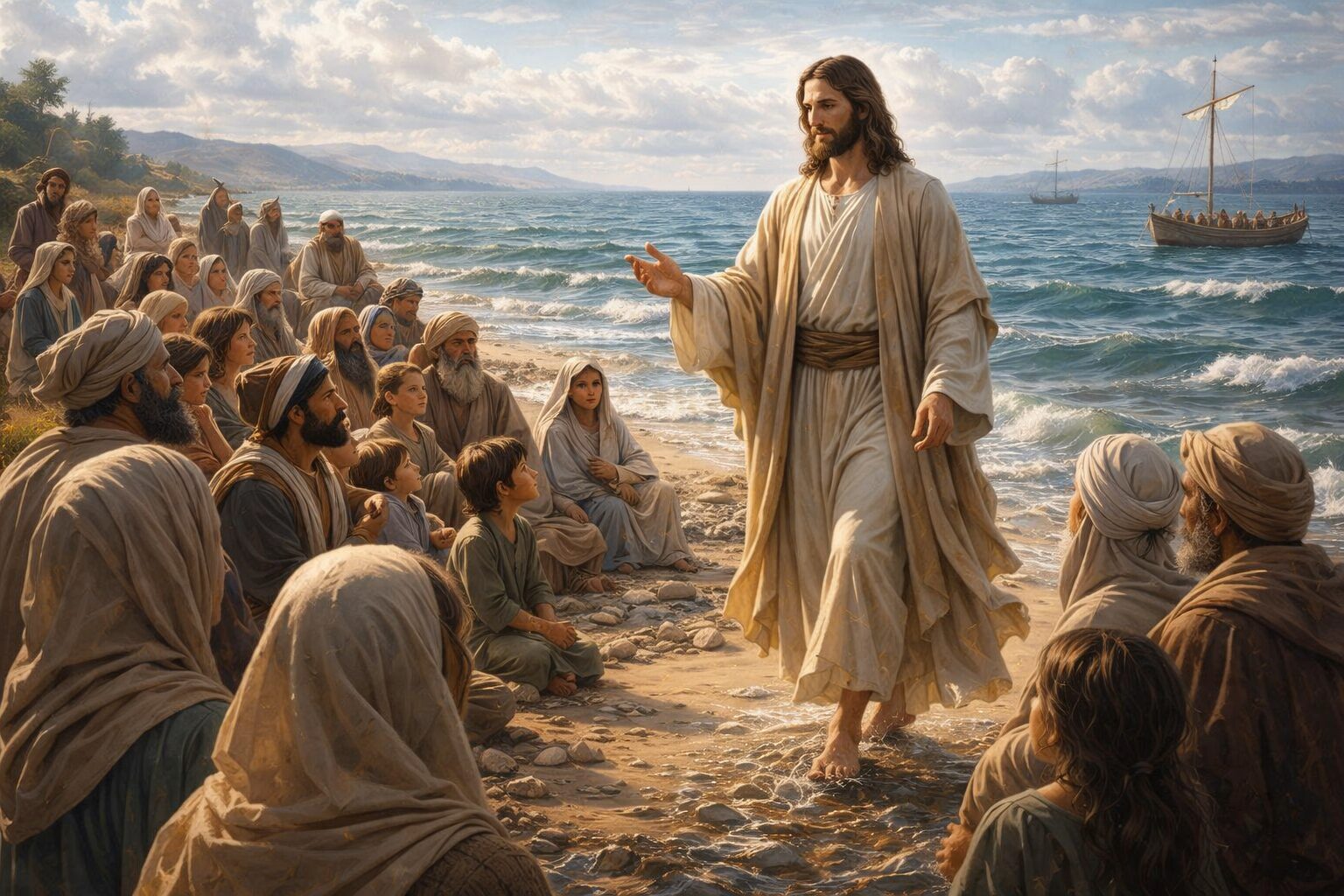
As we continue looking at Jesus’ teachings in John 6, the people ask for a sign and refer to how their ancestor’s received manna from heaven. In response, Jesus redirects their understanding by explaining that it was not Moses who gave them bread from heaven, but God.
He then reveals that God is now offering something greater. Jesus declares that He is the true bread from heaven, the bread that gives life to the world.
At first, the people misunderstand Him because they are still thinking in physical terms, while Jesus is speaking about something much deeper.
He explains that whoever comes to Him will never be hungry, and whoever believes in Him will never be thirsty. In this way, Jesus is showing that He offers complete and lasting fulfillment for the soul.
What Does It Mean to Eat the Bread of Life? (John 6:48–58)
Later in the chapter, Jesus speaks about eating His flesh and drinking His blood. This teaching confuses many people and, as a result, causes some to turn away.
Even so, this statement is not meant to be understood in a physical sense. Instead, Jesus is using spiritual language to describe a deep and ongoing relationship with Him.
To eat the bread of life means to receive Him fully. In the context of Jesus’ teachings in John 6, this means spending consistent time with Him, learning His truth, and allowing His Word to shape your life.
Just as physical food nourishes the body, Jesus nourishes the soul. The difference is that what He gives leads to eternal life.
When Understanding Is Challenging: Why Some Walk Away and Others Stay (John 6:60–66)
Because this teaching was difficult, many people struggled to accept it. They were expecting something simple and physical, something that fit within their understanding. Instead, Jesus was calling them into something deeper.
Rather than leaning in, many chose to walk away. This reveals an important truth. Not everyone is willing to move from surface-level faith into deeper understanding. At times, when God speaks in ways we do not fully understand, we may feel tempted to step back instead of pressing in.
This part of Jesus’ teachings in John 6 reminds us that spiritual understanding is not something we achieve on our own. Jesus explains that no one can come to Him unless the Father draws them.
As 1 Corinthians 1:18 explains, what seems foolish to the world is actually the power of God to those who believe. Without the Spirit of God, spiritual truths can feel confusing or difficult to accept. However, with His help, clarity begins to grow.
In contrast to those who walked away, Peter responded with a powerful statement when Jesus asked the disciples if they also wanted to leave. He said, “Lord, to whom shall we go? You have the words of eternal life.”
“Lord, to whom shall we go? You have the words of eternal life.”
Even when everything is not fully clear, Peter recognized that Jesus is the source of life and that there is nowhere else to go.
Final Reflection
This chapter reminds us that following Jesus is not always easy. It requires faith beyond understanding, a willingness to go deeper, and a heart that is open to truth.
Many people desire the benefits of Jesus yet hesitate when it comes to the depth of relationship He calls for. Still, true life is found in going deeper with Him.
Because of this, Jesus’ teachings in John 6 invite us into a personal moment of reflection. It gently challenges us to examine our focus, our motives, and our level of commitment.
Are we seeking Jesus only for what He can give us, or are we seeking Him for who He truly is?
Are we feeding our flesh more than our spirit, or are we intentionally building a life centered on eternal truth?
Scripture Reflection
“Do not work for food that spoils, but for food that endures to eternal life, which the Son of Man will give you.”
John 6:27
Reflection Questions
What am I pursuing most right now?
Am I feeding my spirit as consistently as I feed my body?
What step can I take today to grow deeper in my relationship with Jesus?
Read more faith-building reflections at walkingwiththelord.net, and for marriage and family encouragement, visit blissfullywedded.com.
Leave a Reply